Pregnancy Yoga: Poses for the Second Trimester
The second trimester encompasses the glory days, or the so-called “honeymoon days”, of pregnancy. Your morning sickness has probably passed (or will do so soon), you may find yourself more energetic, and your belly is growing but hasn’t yet begun to hamper your ability to move freely. This is the time to get into the rhythm of your regular yoga practice on your own if you are a seasoned yogi, or by attending prenatal yoga classes if you are new to yoga. In addition to making you more physically comfortable in the months ahead, prenatal yoga classes are a good forum for meeting other pregnant women. The sense of community and support is a major benefit of a prenatal yoga class, one that is at least as important as the physical aspect.
8 Tips for yoga during Second Trimester
1. Be gentle with yourself and respect your body’s boundaries. Your joints are beginning to loosen up now, so sink into yoga positions slowly and carefully. Hold poses only for as long as you're comfortable. Take your time, and don't push yourself to the point of pain or exhaustion.
2. Listen closely to what your body needs. Be aware that your slowly expanding belly will affect your sense of balance. Practice standing poses, with support if needed. Keep a chair or keep near to the wall, and make sure that you have the support nearby if you suddenly feels dizzy or weak. Learn and decide how to modify the poses so that you are in control of the practice; this will encourage you to listen to your body and build confidence in your ability to cope with your pregnancy.
3. Don’t strain your abdominal muscles. Avoid poses that strain or put pressure on the abdominals like Navasana (Boat Pose) and Plank Pose.
4. Limit the time you spend on your back. Avoid lying on your back, as it can put pressure on your inferior vena cava (the vein that returns blood from the legs to the heart) and reduce blood flow to your uterus. It can also make you feel dizzy and cause shortness of breath and nausea. Use a bolster or pillows to raise your upper body when you're lying down. Or limit the time you're flat on your back to one minute, and roll over onto your side for 30 seconds between each exercise on your back. Use pillows to raise your upper body when you're lying down.
5. Be mindful of your belly. Remember to twist with the help of shoulders, and modify forward bends by bringing your legs wider apart to make space for your growing belly. This extra space will also provide greater stability during standing poses.

6. Explore new ways of practicing. Most asanas can be modified for different body shapes and ability levels. If you are missing back bends or inversions, talk with your prenatal yoga teacher and explore asanas that will give you the satisfaction of a contraindicated pose, but are less demanding on your changing body.
7. Practice with your baby. Include your baby in the practice, especially during relaxation. By the fifth month, you are very aware of your baby's movements. Often, your baby will be more active during your quiet periods, so connect with your baby during relaxation poses. It is important to rest and allow your body to recuperate after a practice.
8. Focus on the mental aspect of yoga over the physical. By backing off from strenuous poses and concentrating on turning inward, you will enjoy the middle trimester much more, and you will prepare well for the intense focus required in labor and delivery and, eventually, motherhood.
Yoga poses during second trimester (13 to 27 weeks)
You can still safely enjoy all of the poses you practiced during the first trimester, and add more asanas to your practice as well.
1. Kantha and Skandha Sanchalana (Gentle Neck and Shoulder Rolls)

Roll your head back and forth, right and left, and in circles clockwise and counterclockwise along with slow gentle breaths. Similarly, rotate your shoulder blades back and forth, up and down, clockwise and counterclockwise. Do each movement 3-5 times.
Benefits
Do this with soft and easy breaths to releases tension from head, neck and shoulder area.
2. Ardha Titali Asana or Ardha Baddha Konasana (Half Butterfly)
Sit with your legs outstretched. Fold your right leg and place your right foot as far up on the left thigh as possible. Place your right hand on top of your folded right knee. Hold the toes of your right foot with your left hand. While breathing out, gently move your right knee up towards your chest. Breathing in, gently push your knee down towards the floor. Make sure that you are keeping your torso straight. Repeat with your left leg. Slowly practice about 10 up and down movements with each leg.
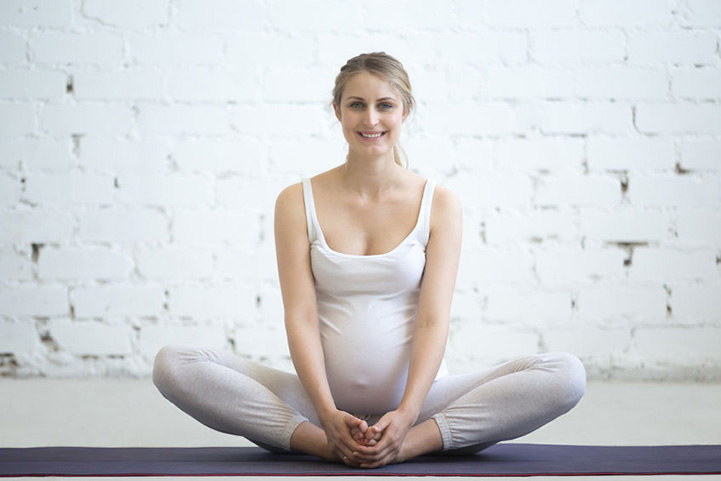
3. Poorna Titali Asana or Baddha Konasana (Full Butterfly)


Comments
Post a Comment